One of the most fundamental decisions when building or re-roofing a New Jersey property is the type of roof system you choose. Flat roofs and pitched roofs each have distinct advantages, cost profiles, and maintenance requirements — and the right choice depends on your property type, budget, and long-term goals.
Understanding the Basic Difference
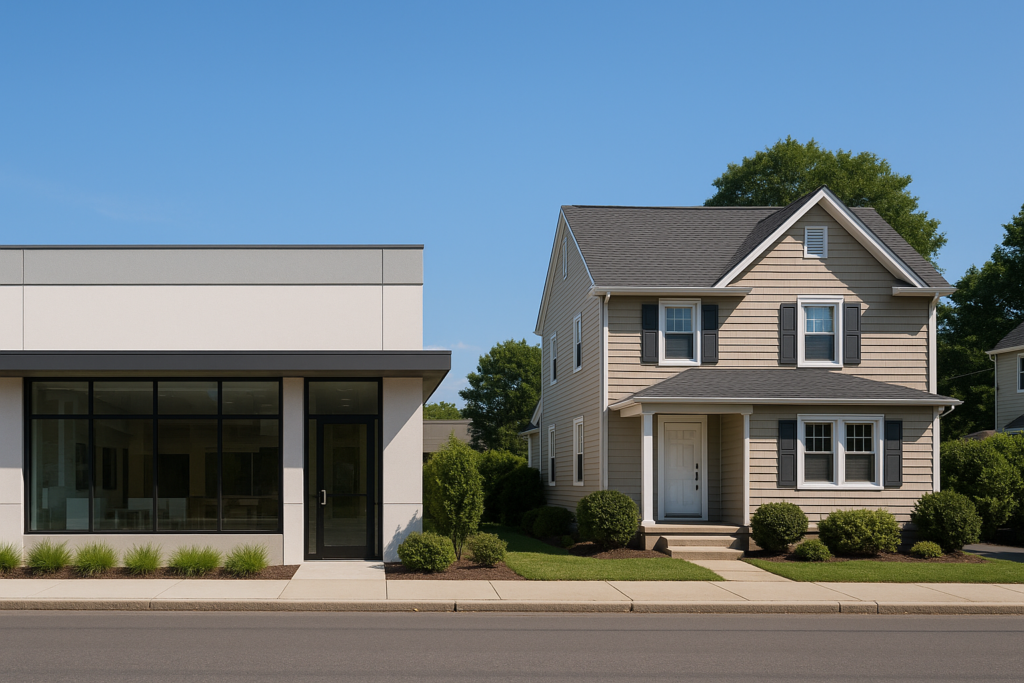
A pitched roof (also called a sloped roof) has an angled surface that allows water and snow to drain naturally by gravity. Most New Jersey residential homes use pitched roofs covered with asphalt shingles, metal panels, or tiles.
A flat roof is not completely flat — it has a very slight slope (usually 1/4 inch per foot) to allow drainage, but it appears flat to the eye. Flat roofs are common on commercial buildings, additions, and modern residential designs.
Advantages of Pitched Roofs in New Jersey
- Natural water and snow shedding: Critical in NJ winters — snow slides off naturally, reducing structural load
- Longer lifespan: Quality asphalt shingles last 20–30 years; metal roofing can last 50+ years
- Lower maintenance: Pitched roofs require less frequent inspection and upkeep
- Attic space: The space under a pitched roof can be used for insulation or storage
- Curb appeal: Traditional pitched roofs remain the standard for residential properties in NJ
Advantages of Flat Roofs in New Jersey
- Lower upfront installation cost: Flat roofs typically cost less per square foot to install
- Usable rooftop space: Ideal for rooftop HVAC units, solar panels, or green roof installations
- Modern aesthetic: Suits contemporary architectural styles increasingly popular in NJ
- Easy access: Simpler to inspect and maintain without the need for specialized safety equipment
Disadvantages to Consider
Flat roofs require more frequent maintenance in New Jersey’s climate. Standing water (ponding) is a constant risk, and NJ’s freeze-thaw cycles can crack flat roofing membranes over time. Without proper drainage and regular inspection, flat roofs can develop leaks that are difficult to locate.
Pitched roofs cost more to install and require scaffolding or specialized safety measures for maintenance. Complex roof designs with multiple valleys and angles can also create more potential leak points.
Best Materials for Each Roof Type in NJ
For pitched roofs: Architectural asphalt shingles are the most popular and cost-effective choice. Metal roofing (standing seam or metal shingles) offers superior durability and energy efficiency.
For flat roofs: TPO (Thermoplastic Polyolefin) and EPDM (rubber roofing) membranes are the most common and reliable options for New Jersey’s climate. Modified bitumen is also widely used.
Which Should You Choose?
For most residential homeowners in New Jersey, a pitched roof remains the best long-term investment — lower maintenance, better snow and water performance, and stronger resale value.
For commercial properties, additions, or modern builds, a properly installed flat roof system with quality materials and good drainage can be an excellent choice.
The best answer depends on your specific property. Alpha Construction LLC installs and repairs both flat and pitched roof systems across New Jersey, and our team can help you evaluate which option makes the most sense for your situation.
Call or text (267) 323-0002 for a free consultation and estimate.
