
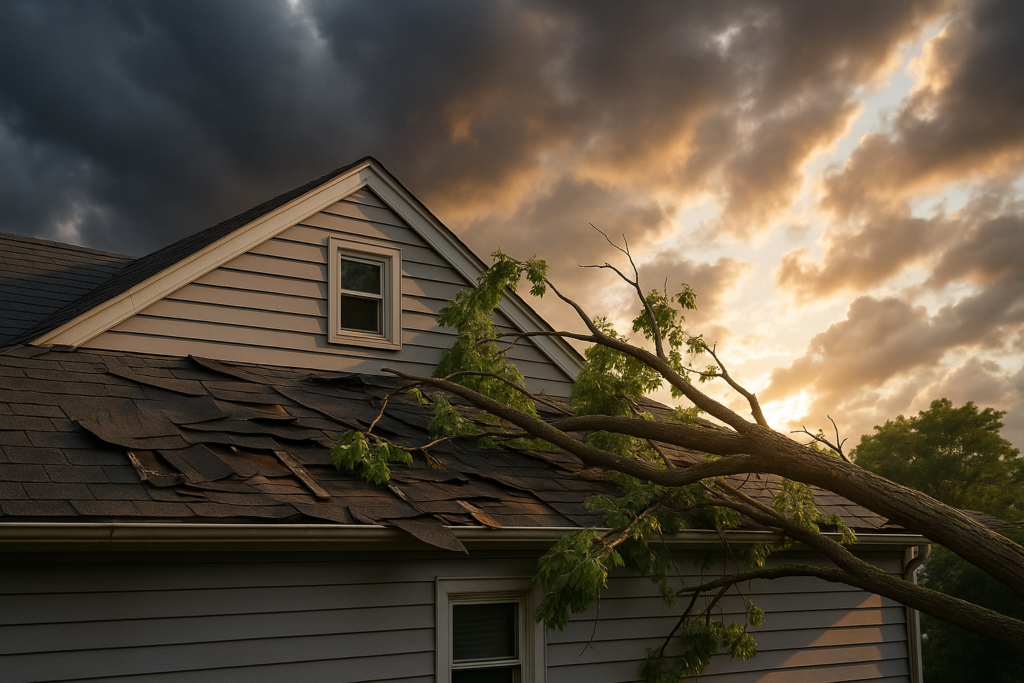
New Jersey is no stranger to severe weather. From powerful nor’easters and summer thunderstorms to tropical storm remnants and heavy snowfall, our roofs take a beating. When a major storm passes through, the hours and days that follow are critical for protecting your home and ensuring you are properly covered by your insurance.
Here is a step-by-step guide on exactly what to do after storm damage to your New Jersey roof.
Step 1: Prioritize Safety First
Before anything else, make sure it is safe to be outside and inside your home. Do not attempt to climb onto your roof to inspect damage yourself — wet or storm-damaged roofs are extremely dangerous. If you see sagging ceilings, structural damage, or smell gas, leave the home immediately and call the appropriate emergency services.
Step 2: Document Everything Thoroughly
As soon as it is safe to do so, photograph and video every piece of damage you can see from the ground — damaged shingles, dented gutters, debris on the roof, water stains on ceilings, and anything else that looks out of the ordinary. This documentation is critical for your insurance claim.
Also make a note of the date and time of the storm, and save any weather reports or alerts for your area. Your insurance company will want to verify the storm event.
Step 3: Apply Temporary Protection if Needed
If there is an active leak entering your home, place buckets or towels to minimize interior water damage while you wait for professional help. You can also cover exposed areas with a tarp to prevent additional water intrusion — but only do this safely from ground level or a stable ladder, never by walking on a damaged roof.
Step 4: Contact Your Homeowner’s Insurance
Report the damage to your insurance company as soon as possible. Most policies require that you report storm damage promptly, and delays can sometimes result in claim complications. Your insurer will assign an adjuster to inspect the damage and assess your claim.
Important tip: Request a copy of the adjuster’s report once the inspection is complete. Having your own independent contractor’s assessment can be valuable if the insurance estimate seems too low.
Step 5: Call a Licensed NJ Roofing Contractor for a Professional Inspection
Not all storm damage is immediately visible from the ground. Hidden damage — including cracked or lifted shingles, compromised underlayment, damaged flashing, and weakened decking — can only be identified by a trained professional. Have a licensed contractor inspect your roof thoroughly before any insurance adjuster visits, so you have your own complete assessment.
Be wary of out-of-state contractors who appear door-to-door after storms (known as storm chasers). Always verify NJ HIC licensing before hiring anyone.
Common Types of Storm Damage in New Jersey
- Wind damage: Lifted, cracked, or completely missing shingles; damaged ridge caps
- Hail damage: Bruised or dented shingles, dented gutters and flashing, granule loss
- Water intrusion: Leaks at flashing points, skylights, or around chimneys
- Fallen debris: Branches or tree limbs that puncture or compress roofing materials
- Ice dams: Common in winter, causing water to back up under shingles
Alpha Construction LLC — Emergency Roof Repair in New Jersey
Alpha Construction LLC provides emergency storm damage inspections and repairs across all of New Jersey. We work directly with insurance companies to make the claims process as smooth as possible for homeowners.
Do not wait. Call or text (267) 323-0002 for fast storm damage response — available 24/7 for emergencies.
